




77% of patients research online before booking a dental appointment. That number should shape every decision you make about your clinic's website. If your site looks like it was built in 2018, loads slowly on a phone, or lacks an online booking option, you are losing patients to the clinic down the road that invested in theirs.
Singapore has over 1,800 registered dentists and hundreds of dental clinics. Competition is fierce, especially in areas like Orchard, Raffles Place, and the heartlands. Most patients compare two to three clinics online before deciding where to go. Your website is not just a digital brochure; it is your first consultation. It needs to answer questions, build trust, and make booking effortless.
We have built websites for healthcare businesses across Singapore, including practices where regulatory compliance is non-negotiable. This guide covers everything you need to know about dental clinic website design in Singapore: from the features that drive bookings to the MOH rules that can get you fined if you ignore them.
Why dental clinics need a professional website
The patient journey has changed. A decade ago, most people found their dentist through word-of-mouth or by walking past a clinic. Today, the journey starts with a search. "Dentist near me." "Teeth whitening Singapore." "Root canal cost Singapore." If your clinic does not appear in those search results, or if your website fails to impress when they click through, you are invisible.
Here is what the data tells us:
- 77% of patients research online before booking any dental appointment
- Most patients compare 2 to 3 clinics on their websites before making a decision
- Over 70% of "dentist near me" searches happen on mobile devices
- Clinics with online booking systems receive significantly more appointments than those relying solely on phone calls
Your website does not need to be flashy. It needs to be fast, trustworthy, mobile-friendly, and easy to navigate. Patients are often anxious about dental visits. A calming, professional website sets the tone before they even walk through your door.
The clinics that invest in their online presence are the ones filling their appointment books. See which clinics are leading the way in our list of the best dental clinics in Singapore. The ones relying on a five-year-old WordPress template with stock photos of smiling models are wondering why enquiries have dried up.
What makes a great dental clinic website
Dental clinic websites have specific design requirements that set them apart from other industries. Your visitors are often in pain, anxious, or comparing options under time pressure. The design needs to accommodate all three.
Clean, calming aesthetics. Dental anxiety is real. Your website should feel reassuring, not sterile. Use soft blues, teals, and whites. Avoid aggressive reds or overly clinical imagery. Generous whitespace and clear typography signal professionalism without intimidation.
Trust signals everywhere. Patients need reassurance before they trust you with their teeth. Display your clinic's MOH licence number, dentist credentials (BDS, MDS, specialist accreditations), and SDC (Singapore Dental Council) registration numbers prominently. These are not just nice-to-have; they are what separates a legitimate clinic from a questionable one in a patient's eyes.
Mobile-first design. Most dental searches happen on phones. Someone with a toothache at 10pm is not sitting at a desktop computer. They are lying in bed, scrolling on their phone, looking for a clinic that can see them tomorrow. Your site must load fast, display properly on small screens, and make booking possible in under 60 seconds.
Fast loading speed. A patient in pain will not wait 5 seconds for your homepage to load. They will tap the back button and try the next result. Aim for a Largest Contentful Paint under 2.5 seconds. Compress images to WebP, minimise JavaScript, and use a CDN optimised for Singapore.
Real photography. Stock photos of models with impossibly white teeth erode trust instantly. Invest in a professional photo shoot of your actual clinic, your reception area, treatment rooms, equipment, and team. Patients want to see where they are going before they arrive. A one-time photo shoot pays for itself many times over.
Essential pages and features for dental clinic websites
Every dental clinic website needs a specific set of pages to serve patients effectively and rank well in search engines. Here is what we recommend as a minimum:
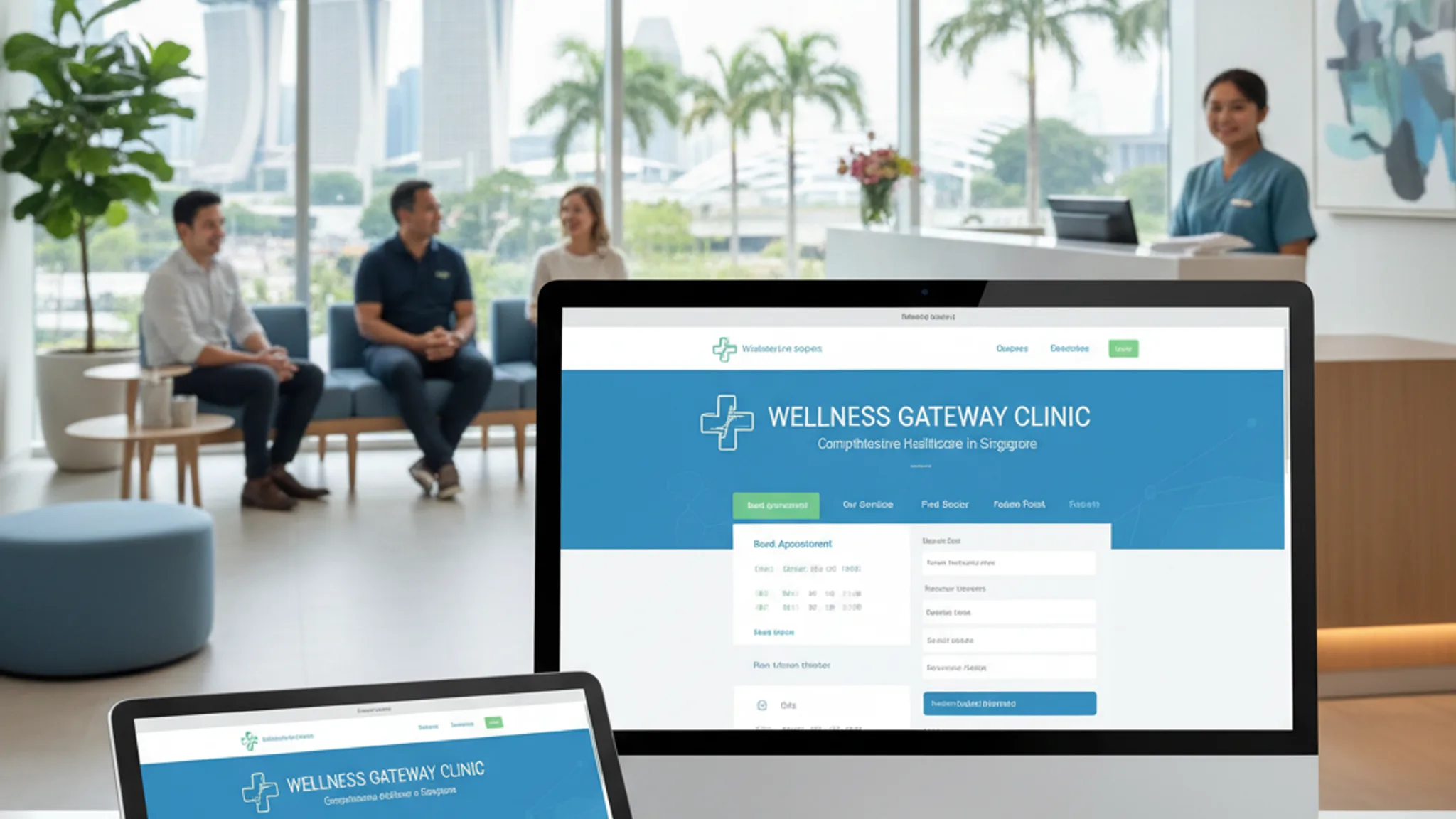
Homepage. Your homepage should communicate three things within 5 seconds: what you do, where you are, and how to book. Include a clear hero section with your clinic name, a one-line value proposition, and a prominent "Book Appointment" button. Below that, highlight your key treatments, introduce your team briefly, and display trust signals (credentials, years of experience, patient count).
Individual treatment pages. This is where most dental websites fall short. Do not lump all treatments onto a single "Services" page. Create dedicated pages for each treatment: teeth whitening, dental implants, braces and Invisalign, root canal treatment, wisdom tooth extraction, dental crowns and bridges, scaling and polishing, and so on. Each page should explain the procedure in plain language, cover what patients can expect, and include indicative pricing where possible. This approach also gives you a massive SEO advantage, as each page can target a specific keyword like "dental implants Singapore" or "Invisalign cost Singapore."
Dentist profiles. Every dentist needs a dedicated profile page with their full name, qualifications, SDC registration number, areas of specialisation, and a professional photo. Patients want to know who will be treating them. A brief personal touch (years of experience, special interests, languages spoken) helps build connection.
About page. Tell your clinic's story. When was it established? What is your approach to patient care? What technology do you use? Patients want to feel they are choosing a clinic with a philosophy, not just a random shopfront with a dental chair.
Before-and-after gallery (compliant). This requires careful handling due to MOH and SDC regulations, which we cover in the next section. When done compliantly, a visual gallery of treatment outcomes is one of the most powerful conversion tools on a dental website. Use stock procedural illustrations or 3D treatment simulations rather than actual patient photos if you want to avoid regulatory risk entirely.
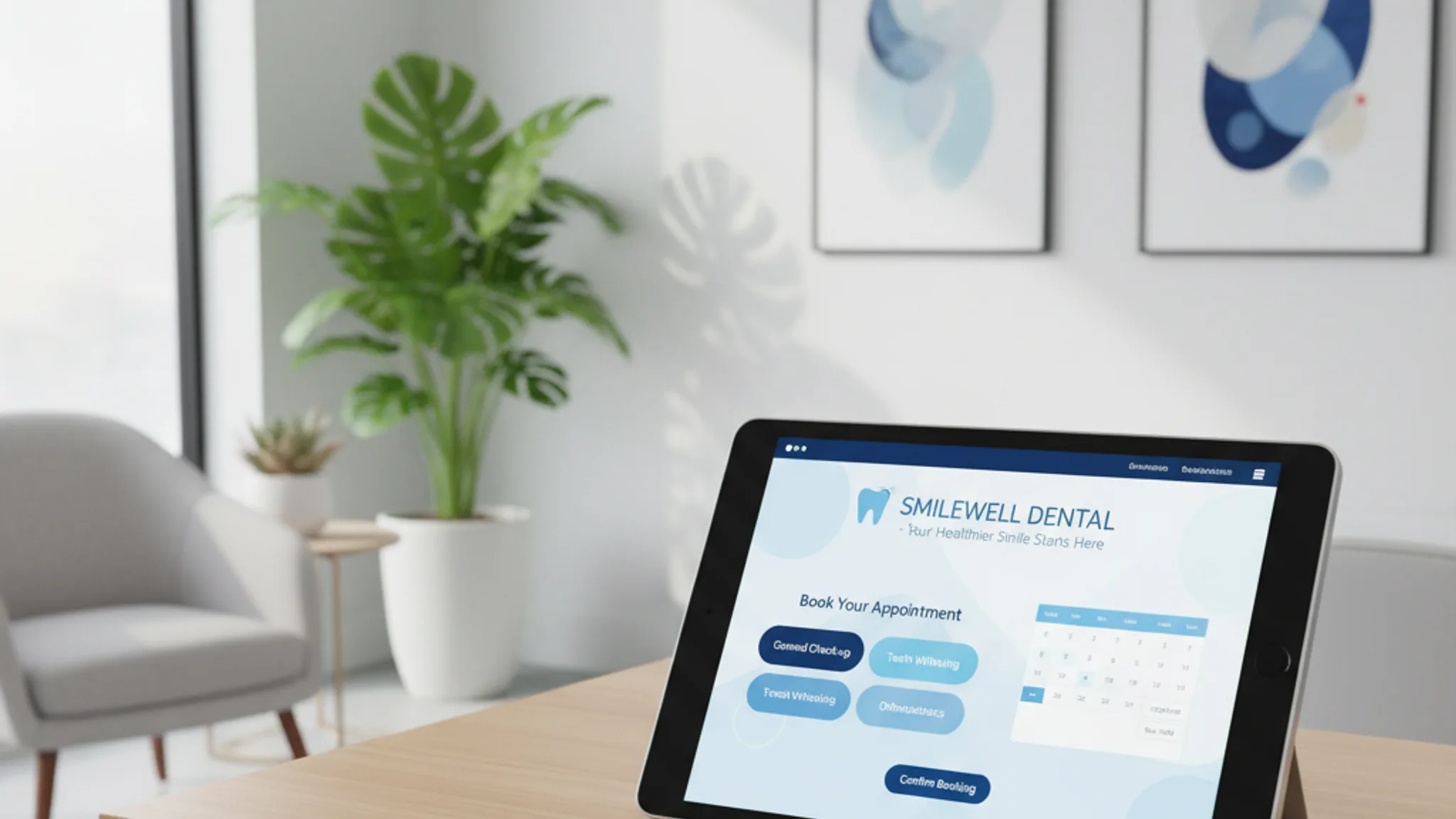
Online booking system. Non-negotiable. Integrate a booking system that shows available time slots, lets patients select a dentist and treatment type, and sends automatic confirmation. Options range from simple embedded forms to full practice management integrations like Dentally or Clinicmaster. At minimum, provide a booking form that captures name, phone, preferred date and time, and reason for visit.
Google Reviews integration. Displaying your Google Reviews on your website (with proper attribution) adds social proof. Unlike curated testimonials, Google Reviews are third-party verified, which makes them more credible and generally falls outside the scope of "advertising" under MOH guidelines. We recommend embedding a live feed rather than cherry-picking reviews.
Blog and educational content. A blog with dental health tips, procedure explanations, and FAQ content serves two purposes: it builds patient trust, and it drives organic search traffic. Topics like "How much do dental implants cost in Singapore?" or "Is wisdom tooth removal painful?" attract patients at the research stage of their journey.
Contact page with multiple channels. Include your address with an embedded Google Map, phone number (click-to-call on mobile), email, WhatsApp link, and operating hours. Make it impossible for patients not to find a way to reach you.
Pricing transparency. Singapore patients increasingly expect upfront pricing information. You do not need to list every procedure down to the dollar, but providing consultation fees, common procedure price ranges, and information about Medisave, CHAS, and insurance coverage sets you apart from clinics that hide their fees.
Recommended reads
MOH compliance for dental clinic websites
This is where dental clinic websites differ most from regular business websites. Singapore's Ministry of Health enforces strict advertising guidelines through the Healthcare Services Act 2020 (HSA) and related regulations. The Singapore Dental Council (SDC) adds further restrictions specific to dental practitioners. Getting these rules wrong can result in fines of up to S$100,000 for a first offence, or disciplinary proceedings against your dentists.
What you cannot do on your dental clinic website:
- Before-and-after patient photos used as advertising: this is the most commonly violated rule, especially among aesthetic and cosmetic dentistry clinics. Using patient photos to promote outcomes is restricted under the SMC Ethical Code (which applies to dental practitioners under SDC's similar framework)
- Patient testimonials as promotional content: you cannot feature curated patient reviews or testimonials to advertise your services. However, displaying third-party Google Reviews with proper attribution is generally treated differently
- Guaranteed outcomes: no "100% success rate," "painless guaranteed," or similar claims. Every patient is different, and guarantees are misleading
- Superlative claims: no "best dentist," "top clinic," "number one dental practice," "leading," or "premier." These are unverifiable and prohibited
- Inducements: promotional discounts ("50% off teeth whitening!") and free consultations used as marketing tools are restricted
- Unsubstantiated claims: every factual statement on your website must be verifiable
What you can include:
- Factual information about your clinic (address, hours, services offered)
- Dentist qualifications, SDC registration numbers, and professional memberships
- MOH licence numbers
- Non-promotional treatment descriptions explaining what a procedure involves
- Fees and charges (MOH actively encourages fee transparency)
- Educational health content and blog posts
- Photographs of your clinic premises and equipment
Our recommendation: have your website content reviewed by a healthcare lawyer before launch. We build compliance awareness into every healthcare website project, but the final legal sign-off should always come from a qualified professional. For the full regulatory text, refer to the Healthcare Services Act 2020 and the Singapore Dental Council guidelines.
Local SEO for dental clinics
For dental clinics, local SEO is not just important; it is everything. Almost all dental searches have local intent. Nobody flies across the country for a filling. Patients search for dentists near their home, their workplace, or wherever they happen to be when the toothache strikes.
Google Business Profile (GBP) is your most valuable asset. The Google Maps "3-pack" (those three clinic listings at the top of local search results) drives more clicks than the organic results below it. To rank in the map pack:
- Claim and fully complete your Google Business Profile
- Choose the correct primary category ("Dentist" or "Dental Clinic")
- Add all treatments as services within GBP
- Upload real photos regularly (Google rewards active profiles)
- Keep your operating hours, phone number, and address perfectly accurate and consistent across all directories
- Respond to every Google Review, both positive and negative, promptly and professionally
"Dentist near me" optimisation. These searches have exploded in recent years. To capture them, your website needs:
- Your clinic's full address on every page (preferably in the footer)
- An embedded Google Map on your contact page
- Location-specific content mentioning your neighbourhood, nearby MRT stations, and landmarks
- Consistent NAP (Name, Address, Phone) across your website, GBP, and every online directory listing
Reviews strategy. Google Reviews are a major ranking factor for local search. Clinics with more reviews and higher ratings rank higher in the map pack. Encourage satisfied patients to leave reviews (a simple follow-up SMS or email after their appointment works well). Never buy fake reviews; Google's detection is sophisticated, and the penalty is profile suspension.
Schema markup for medical practices. Implement structured data markup using the Dentist, MedicalOrganization, and LocalBusiness schemas. This helps Google understand your clinic's name, address, phone, opening hours, treatments offered, and dentist profiles. Add FAQPage schema to your treatment pages and FAQ section for featured snippet visibility. Most dental clinic websites in Singapore have zero structured data, so adding it gives you a genuine competitive advantage.
For a comprehensive local SEO strategy, read our local SEO guide for Singapore businesses.
How much does a dental clinic website cost in Singapore?
Dental clinic websites in Singapore typically cost between S$3,000 and S$12,000, depending on features, design complexity, and integrations. Here is a rough breakdown:
- S$3,000 to S$5,000: a clean, mobile-responsive website with essential pages (homepage, about, treatments, dentist profiles, contact). Basic contact form or embedded booking widget. Suitable for a single-location clinic with a straightforward service offering
- S$5,000 to S$8,000: everything above, plus a custom design tailored to your brand, individual treatment pages optimised for SEO, a blog section, Google Reviews integration, and a more sophisticated booking system with dentist and time slot selection
- S$8,000 to S$12,000: a premium, fully custom website with practice management system integration (e.g., Dentally, Clinicmaster), multi-location support, patient portal functionality, advanced SEO setup, speed optimisation, and ongoing content strategy. Suitable for group practices or clinics with ambitious growth plans
Factors that affect pricing:
- Number of treatment pages: a general dentistry clinic might need 8 to 10, while a specialist clinic offering cosmetic, orthodontic, and surgical services could need 20+
- Booking system complexity: a simple form is cheap; real-time slot availability with practice management integration is not
- Multi-location support: separate pages with unique content, maps, and team listings for each branch
- Content creation: professional copywriting for treatment pages, dentist bios, and blog posts
- Photography: a professional clinic photo shoot typically adds S$500 to S$1,500 but is well worth the investment
Ongoing costs to budget for include hosting (S$20 to S$100/month), domain renewal (S$30 to S$50/year), and maintenance or updates (S$100 to S$500/month depending on scope). Some clinics also invest in ongoing SEO and content marketing to maintain and grow their search rankings.
For a deeper breakdown of website pricing in Singapore, see our complete guide to website costs.
Common mistakes dental clinic websites make
We have reviewed hundreds of dental clinic websites in Singapore. The same mistakes appear over and over again:
1. Relying on stock photos. A homepage featuring a stock image of a model with blindingly white teeth next to a dentist in a pristine lab coat fools nobody. Patients can tell the difference between a real clinic photo and a staged stock image. It signals that the clinic either does not care enough to invest in real photography or has something to hide. Professional photos of your actual clinic, staff, and facilities build far more trust than any stock library can.
2. No online booking option. If the only way to book an appointment is to call during business hours, you are losing patients to every competitor that has a booking form. Younger patients in particular strongly prefer online booking. They will choose a slightly further clinic that lets them book at midnight over a nearby one that requires a phone call at 9am.
3. Ignoring mobile users. A website that looks great on desktop but requires pinching and scrolling on a phone is not a responsive website. It is a broken one. Test your site on actual phones (not just browser resize). Check that buttons are tappable, text is readable without zooming, and forms are easy to complete with a thumb.
4. Poor page speed. Heavy, uncompressed images are the number one culprit. We see dental websites loading 5MB hero images of clinic interiors that take 8 seconds to display. Compress everything to WebP, implement lazy loading for below-the-fold images, and test regularly with PageSpeed Insights. Aim for 90+ on both mobile and desktop.
5. No patient reviews visible on the website. Your Google Reviews are one of your strongest trust signals. Not embedding them on your website means visitors have to go find them separately, and many will not bother. Display a live feed of your Google Reviews on your homepage and treatment pages.
6. All treatments on a single page. A single "Services" page listing every treatment in bullet points is an SEO disaster and a UX failure. Each treatment deserves its own page with a detailed, patient-friendly explanation. This dramatically improves both search rankings and patient understanding of what you offer.
7. MOH compliance violations. Before-and-after photos, "best dentist" claims, patient testimonials used as advertising. Many clinics do not even realise they are violating regulations because their web designer never flagged it. Ignorance is not a defence the authorities accept.
Getting more patients through your dental clinic website
A beautiful website is useless if it does not convert visitors into booked appointments. Here is how to turn your dental clinic website into a patient acquisition machine:
Strategic CTAs on every page. Every page should have a clear next step. "Book an Appointment" should be visible without scrolling on every page, not just the homepage. Use a sticky header or floating button that follows the visitor as they scroll. On treatment pages, the CTA should be specific: "Book a Teeth Whitening Consultation" is more effective than a generic "Contact Us."
Reduce friction in the booking process. Every additional field on your booking form costs you appointments. Name, phone number, preferred date, and reason for visit. That is all you need for an initial booking. You can collect the rest during the actual appointment. If you use a multi-step booking form, show progress indicators so patients know how far along they are.
Build trust above the fold. Within the first screen (before any scrolling), patients should see your clinic name, a professional image of your clinic or team, your key credentials, and a booking button. Trust signals like "SDC Registered," "MOH Licensed," and "Serving Singapore since [year]" remove doubt immediately.
WhatsApp integration. Singapore runs on WhatsApp. Adding a WhatsApp chat button to your website gives patients an instant, low-commitment way to ask questions before booking. Many clinics report that WhatsApp enquiries convert at a higher rate than form submissions because the conversation is immediate and personal.
Emergency contact prominence. Dental emergencies do not follow business hours. If your clinic offers emergency dental services, make that obvious on your website. A prominent "Dental Emergency? Call [number]" banner with a click-to-call link serves patients in urgent need and differentiates you from clinics that only accept scheduled visits.
Content that addresses anxiety. Many patients delay dental visits because of fear. Content that acknowledges dental anxiety, explains sedation options, describes what to expect during procedures step by step, and uses calming language throughout the site helps convert anxious browsers into booked patients. It is not just good marketing; it is good patient care.
For more conversion optimisation strategies, see our clinic website design service or our guide on SEO services in Singapore.
Frequently asked questions
How long does it take to build a dental clinic website?
A standard dental clinic website takes 4 to 8 weeks from initial consultation to launch. This includes discovery, design, development, content creation, and testing. More complex projects with practice management integrations or multi-location setups can take 8 to 12 weeks.
Can I use patient before-and-after photos on my dental website?
This is heavily restricted under MOH and SDC guidelines. Using patient photos to promote treatment outcomes is generally prohibited under healthcare advertising regulations. You can use procedural illustrations, 3D treatment simulations, or stock educational images instead. Always consult a healthcare lawyer before publishing any patient imagery.
Do I need a separate website for each clinic location?
No. A single website with dedicated pages for each location is the better approach. Each location page should have its own address, map, team listings, and operating hours. This consolidates your domain authority while still allowing each branch to rank for local search terms. Create separate Google Business Profiles for each location.
Should my dental website have a blog?
Yes. A blog with educational dental content drives organic traffic, builds patient trust, and gives you material to share on social media. Topics like procedure explanations, dental care tips, and answers to common patient questions attract visitors at the research stage. Each blog post is also an opportunity to rank for additional keywords.
What booking system should I use for my dental clinic website?
It depends on your practice size and existing systems. Small clinics can start with an embedded booking form that sends notifications to the front desk. Larger practices benefit from integrating with practice management software like Dentally, Clinicmaster, or Plato. The key requirement is that booking must work smoothly on mobile devices and take under 60 seconds to complete.
How do I get my dental clinic to rank higher on Google?
Focus on three areas: a fully optimised Google Business Profile, individual treatment pages targeting specific keywords (e.g., "dental implants Tampines"), and a consistent reviews strategy. Technical foundations like fast page speed, mobile responsiveness, and schema markup support all of this. For a comprehensive approach, read our local SEO guide.
A dental clinic website in Singapore needs to do three things exceptionally well: comply with MOH and SDC regulations, build patient trust from the first click, and convert visitors into booked appointments. Miss any one of these, and your website is a liability rather than an asset.
The regulatory landscape is what makes dental website design different from other industries. You cannot hand this project to a generic web designer who has never heard of the Healthcare Services Act. The penalties for advertising violations are significant, and the reputational damage to your practice can be even worse.
Get it right, though, and your website becomes your hardest-working team member. It ranks for treatment keywords, answers patient questions at 2am, builds trust through credentials and real photography, and books appointments while your clinic is closed. In a market with over 1,800 registered dentists, that kind of online presence is not a luxury. It is a competitive necessity.
If you are planning a new dental clinic website or suspect your current one is underperforming (or non-compliant), see our clinic website design service or get in touch for a free assessment.
Sources & References (5)

Written by
Terris
Founder & Lead Strategist
Terris has designed websites for healthcare businesses across Singapore, combining patient-friendly UX with compliance-aware design. He understands the trust signals and conversion strategies that help clinics attract and retain patients online.
Want to see these strategies in action? Browse our portfolio or get in touch to discuss your project.