





89% of Singapore internet users are active on social media platforms every single day. The average Singaporean maintains accounts across 6.4 platforms and spends roughly 2.5 hours scrolling through social content. That is a massive audience, sitting right there, waiting to discover your business.
But here is the problem we see over and over again when working with Singapore SMEs: most businesses are posting without a plan. They share a product photo on Monday, go silent for two weeks, then panic-post a promotion on Friday. There is no consistency, no direction, and no way to measure whether any of it is actually working.
A social media strategy changes that. It turns random posting into purposeful communication that builds awareness, earns trust, and drives real business results. Whether you are a one-person operation or managing a team of ten, the steps below will help you build a social media strategy tailored to the Singapore market.
We have broken this down into 11 practical steps. No fluff, no abstract theory. Just a clear roadmap you can follow starting today.
1. Set clear, measurable goals
Every social media strategy starts with one question: what do you actually want to achieve? "Get more followers" is not a strategy. It is a vanity metric that means nothing if those followers never buy from you.
Before you post anything, define goals that tie directly to business outcomes. We recommend using the SMART framework (Specific, Measurable, Achievable, Relevant, Time-bound) to keep things grounded. Here are some examples:
- Brand awareness: Increase Instagram reach by 40% over the next three months
- Lead generation: Generate 50 qualified enquiries per month from LinkedIn content
- Sales: Drive $15,000 in monthly revenue from social media referral traffic
- Community: Grow an engaged Facebook Group to 2,000 members by Q3
- Customer retention: Reduce response time on social DMs to under two hours
The goal you choose shapes everything else. An awareness goal means you optimise for reach and impressions. A lead generation goal means you optimise for clicks and conversions. A retention goal means you optimise for response time and sentiment.
Most Singapore SMEs should start with one primary goal and one secondary goal. Trying to do everything at once spreads your resources too thin and makes it impossible to know whether your strategy is working. We cover how to measure digital marketing ROI in detail if you want a deeper dive into tracking outcomes.
2. Define your target audience in Singapore
Singapore is a small market, but it is incredibly diverse. A strategy that works for a CBD-based B2B consultancy will fail spectacularly for a heartland F&B business. You need to understand exactly who you are trying to reach.
Start by answering these questions:
- Demographics: Age range, gender split, income bracket, location within Singapore
- Language preferences: English-dominant? Mandarin? Malay? Tamil? Multilingual content that blends English with Chinese, Malay, or Tamil gets 47% higher engagement in the Singapore market
- Platform behaviour: Where does your audience actually spend time? Professionals aged 30 to 50 lean toward LinkedIn and Facebook. Gen Z audiences live on TikTok and Instagram
- Content preferences: Do they prefer quick tips, long-form guides, behind-the-scenes videos, or polished graphics?
- Pain points: What problems keep them up at night? What solutions are they actively searching for?
We recommend building two to three audience personas. Give each one a name, a job title, a set of challenges, and a preferred platform. For example: "Sarah, 35, marketing manager at a mid-sized logistics firm, uses LinkedIn daily, struggles with lead generation, consumes industry reports and short video content."
97% of Singaporeans access social media via smartphones, so your audience personas should reflect mobile-first behaviour. Think about when they scroll (morning commute, lunch break, late evening), what catches their attention in a fast-moving feed, and what makes them stop and tap.
3. Choose the right platforms
One of the biggest mistakes Singapore businesses make is trying to be everywhere. They create accounts on Facebook, Instagram, TikTok, LinkedIn, YouTube, X, Pinterest, and Threads, then wonder why they cannot keep up. The result is half-abandoned profiles with outdated cover photos and sporadic posts that make the brand look neglected.
You do not need to be on every platform. You need to be on the right platforms for your business. Here is a snapshot of Singapore's social media landscape:
- Facebook: 4.33 million users. Still the largest platform in Singapore. Best for community building, local business visibility, events, and paid advertising with detailed targeting
- Instagram: 3.61 million users. Strong for visual brands (F&B, fashion, beauty, fitness, lifestyle). Reels are now the primary content format
- TikTok: Rapidly growing, especially among 18 to 34 year olds. Best for brand awareness through short-form video content and viral potential
- LinkedIn: Essential for B2B businesses, professional services, and recruitment. Organic reach is still strong compared to other platforms
- YouTube: The second-largest search engine. Great for educational content, product demos, and long-form video that builds authority
- WhatsApp: Not a traditional social platform, but critical in Singapore for customer communication and WhatsApp marketing
Match your platform choice to your goals and audience. A B2B SaaS company should prioritise LinkedIn and YouTube. A bubble tea shop should focus on Instagram and TikTok. A neighbourhood clinic should invest in Facebook and Google Business Profile.
Our recommendation: start with two platforms, do them well, then expand once you have a rhythm. Quality beats quantity every time. If you are unsure which platforms fit your business, our social media management service includes a full platform analysis.
4. Audit your current social media presence
Before you build something new, take stock of what you already have. A social media audit tells you what is working, what is wasting your time, and where the gaps are.
Here is how to run a simple audit in about an hour:
- List all your social accounts (including ones you forgot about). Check that profile photos, bios, links, and contact details are consistent and up to date
- Review your last 30 days of content. Which posts got the highest engagement? Which ones got zero traction? Look for patterns in format, topic, and timing
- Check your audience demographics inside each platform's analytics. Are the people following you actually your target customers?
- Benchmark against competitors. Pick three direct competitors in Singapore and review their social presence. What content formats do they use? How often do they post? What seems to resonate with their audience?
- Identify content gaps. Are there topics your audience cares about that nobody in your industry is covering well? Those are your opportunities
Document everything in a simple spreadsheet. You want columns for platform, followers, average engagement rate, top-performing content types, posting frequency, and notes. This becomes your baseline for measuring improvement over the next quarter.
Do not skip the competitor analysis. You do not need to copy what others are doing, but understanding the landscape helps you find angles that differentiate your brand. If every competitor posts polished product photos, maybe raw behind-the-scenes content is your edge.
Recommended reads
5. Create content pillars
Content pillars are the four to six core themes that all your social media content revolves around. They give your brand consistency, make content planning easier, and ensure you are not just posting random things whenever inspiration strikes.
Here are the content pillar categories we typically recommend for Singapore businesses:
- Educate: Tips, how-tos, industry insights, myth-busting. Positions you as an authority. Example: a dental clinic sharing "5 foods that stain your teeth (and how to prevent it)"
- Entertain: Relatable memes, trending audio, light-hearted content. Builds reach and shareability. Example: a coworking space creating a Reel about "types of people in every meeting room"
- Convert: Product showcases, client testimonials, limited-time offers, case studies. Drives sales and enquiries. Example: a web design agency sharing a before-and-after website transformation
- Advocate: User-generated content, customer stories, reviews, community spotlights. Builds social proof. Example: a fitness studio reposting a client's transformation journey
- Behind-the-scenes: Team introductions, office culture, process reveals, day-in-the-life content. Humanises your brand. Example: a bakery showing the 4am bread-making process
- Community: Local events, Singapore cultural moments, collaborations with other local businesses. Strengthens local connection. Example: a retailer creating content around National Day or Lunar New Year
A good rule of thumb: 40% educational, 20% entertainment, 20% conversion, and 20% split between advocacy, behind-the-scenes, and community content. But this ratio depends on your goals. If lead generation is your primary objective, you might increase the conversion pillar to 30%.
Write your pillars down. Share them with anyone who creates content for your brand. When someone asks "what should we post today?", the answer should always fit within one of your pillars. For more on developing a content approach, read our guide on content marketing for Singapore SMEs.
6. Build a content calendar
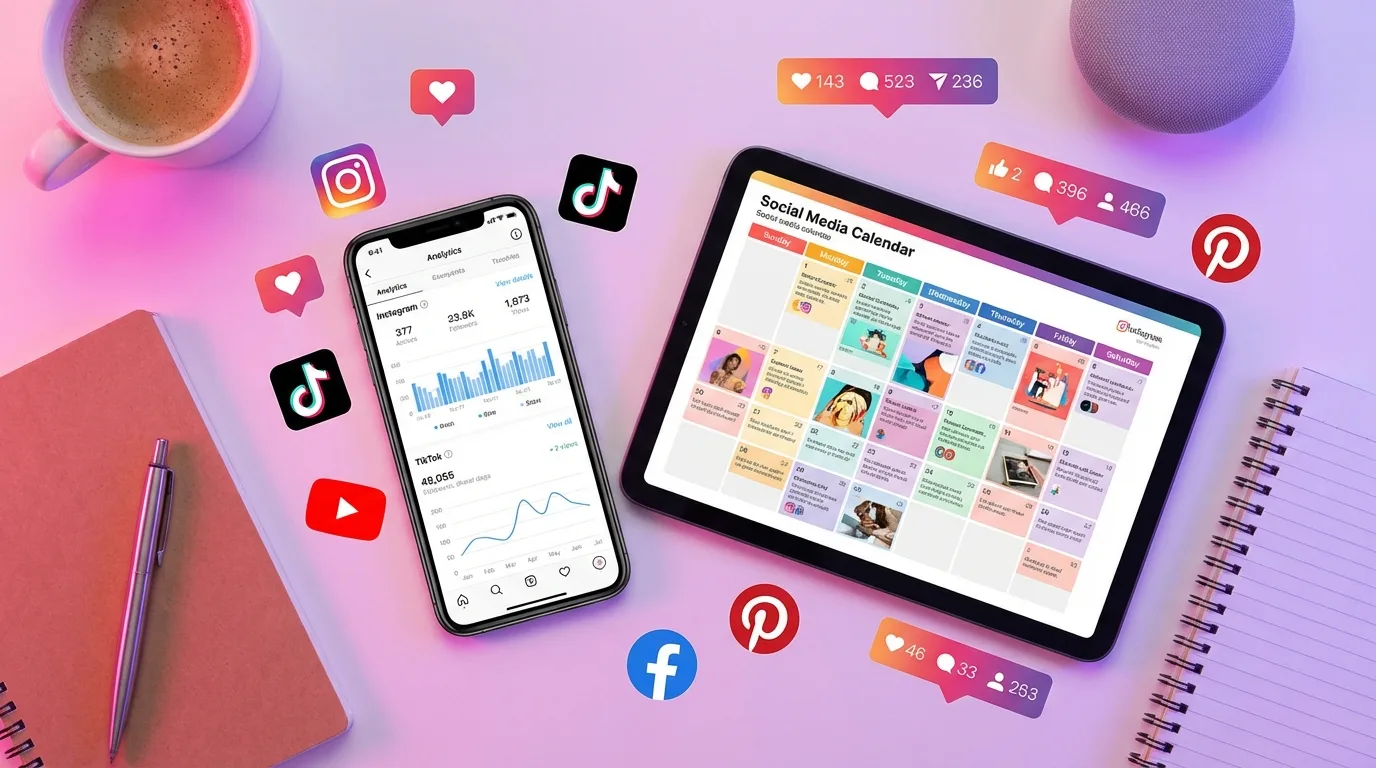
A content calendar takes your strategy from "we should post something" to "here is exactly what we are posting, when, on which platform, and why." It is the operational backbone of your entire social media effort.
Your calendar should include:
- Posting schedule: How many times per week on each platform? For most Singapore SMEs, we recommend three to five posts per week on your primary platform and two to three on your secondary one
- Content type per post: Static image, carousel, Reel/TikTok, Story, text post, link share
- Pillar assignment: Which content pillar does each post fall under?
- Copy and visuals: Draft captions and design briefs in advance so you are not scrambling day-of
- Key dates: Singapore public holidays, festive periods (Chinese New Year, Hari Raya, Deepavali, Christmas), industry events, product launches, and sales
Timing matters in Singapore. Based on engagement data across accounts we manage, these windows tend to perform well:
- Instagram and Facebook: 12pm to 1pm (lunch break), 7pm to 9pm (evening wind-down)
- LinkedIn: 7:30am to 8:30am (morning commute), 12pm to 1pm (lunch)
- TikTok: 7pm to 10pm (peak entertainment hours), weekends for leisure content
Batch your content creation. Set aside one day per week (or two days per month) to create all the content you need. Write captions, shoot videos, design graphics, and schedule everything in advance. Tools like Meta Business Suite (free), Later, or Hootsuite make scheduling straightforward.
The calendar does not need to be complicated. A shared Google Sheet works perfectly for small teams. The point is having a plan that everyone can see and follow. If you need help building and executing a content pipeline, our content marketing service includes calendar planning, creation, and scheduling.
7. Invest in short-form video
If there is one format that dominates social media in 2026, it is short-form video. Reels, TikToks, and YouTube Shorts are not optional anymore. They are the primary way platforms distribute content, and they generate 2.5x higher engagement than static image posts.
The good news: short-form video does not require a production crew or expensive equipment. A smartphone, decent lighting, and a simple editing app are all you need to get started. What matters is the content, not the production value.
Short-form video ideas that work for Singapore businesses:
- Quick tips: 30-second advice clips related to your industry (a physiotherapist demonstrating a stretch, a tax consultant explaining a GST rule)
- Behind-the-scenes: Show how your product is made, how your team works, or what a day in your business looks like
- Before and after: Transformations are endlessly watchable. Works for salons, renovators, web designers, personal trainers, and cleaning services
- Trending audio: Jump on trending sounds with a spin relevant to your business. Speed is key here; trends have a shelf life of days, not weeks
- Customer testimonials: A 15-second clip of a happy customer is more convincing than a paragraph of marketing copy
- FAQ answers: Turn your most common customer questions into quick video responses
The algorithm rewards consistency. Posting three Reels per week is better than posting one viral video and going silent for a month. The more you publish, the more data the algorithm has to identify your ideal audience.
For a deeper look at leveraging TikTok specifically, check out our guide on TikTok marketing in Singapore.
8. Engage and build community
Social media is a two-way conversation. Too many businesses treat it like a billboard: they post, then walk away. That approach does not work when 72% of Singapore consumers check a brand's social media presence before making a purchase decision.
Engagement is not just a metric. It is the mechanism through which social media actually builds trust and drives sales. Here is how to do it well:
- Respond to every comment and DM. Within 24 hours, ideally sooner. Even a simple "thank you" or emoji reaction shows that there is a real person behind the brand
- Ask questions in your captions. "Which do you prefer, A or B?" or "Tag someone who needs to see this." These prompts encourage interaction, which signals to the algorithm that your content is worth distributing
- Use polls, quizzes, and question stickers in Stories. They are low-effort for your audience and high-value for engagement metrics
- Encourage user-generated content (UGC). Create a branded hashtag and feature customer content on your page. People love being recognised by brands they follow
- Join local conversations. Use Singapore-specific hashtags (#sgfood, #sgbusiness, #supportlocal) and engage with other local accounts. Comment on their posts. Share their content when it is relevant. Social media is social first
For Singapore businesses, WhatsApp deserves special attention. Many customers prefer to enquire via WhatsApp rather than filling in a form or calling. Integrating WhatsApp into your social media workflow (link in bio, click-to-chat ads, Story swipe-ups) creates a seamless path from discovery to conversation. Read more about this in our WhatsApp marketing guide.
Community building takes time. You will not see results in the first week. But the brands that consistently show up, respond, and engage are the ones that build genuine loyalty in the Singapore market.
9. Set up paid social amplification
Organic reach alone will not get you far on most platforms in 2026. Facebook organic reach for business pages sits around 2 to 5% of your followers. Instagram is not much better. If you want consistent visibility, paid social advertising needs to be part of your strategy.
There are two levels of paid social, and they serve different purposes:
- Boosted posts: Take an existing post that is already performing well organically and put budget behind it to reach a wider audience. Simple, fast, and effective for awareness. Budget: $5 to $20 per post
- Managed ad campaigns: Custom-built campaigns with specific objectives (traffic, leads, conversions), refined targeting, A/B-tested creatives, and conversion tracking. More complex but far more powerful. Budget: $500 to $3,000+ per month depending on scale
For Singapore SMEs starting out, we recommend a two-tier approach:
- Boost your top-performing organic posts each week ($50 to $100/month). This extends the reach of content that has already proven it resonates
- Run one to two dedicated lead generation or traffic campaigns per month with specific goals and tracking ($300 to $500/month). This is where you drive measurable business outcomes
Targeting in Singapore is powerful because the market is compact. You can target by location (down to specific postal districts), language preference, job title, interests, behaviours, and even life events. A wedding photographer can target engaged couples in Singapore who follow bridal accounts. A tuition centre can target parents of primary school children in specific neighbourhoods.
For a detailed breakdown of costs and platform comparison, read our guide on social media marketing costs in Singapore. If you are weighing Instagram ads versus Facebook ads, we have covered that too.
10. Track, measure, and optimise
A strategy without measurement is just guesswork. You need to track the right metrics, review them on a regular schedule, and make data-informed adjustments. This is where most businesses fall short: they either track nothing or they drown in data without knowing what any of it means.
Match your KPIs to your goals:
- Awareness goals: Reach, impressions, follower growth rate, share of voice
- Engagement goals: Engagement rate (likes + comments + shares / reach), saves, Story completion rate, comment sentiment
- Traffic goals: Link clicks, click-through rate (CTR), website sessions from social, bounce rate from social traffic
- Lead generation goals: Form submissions, DM enquiries, cost per lead, lead quality score
- Sales goals: Conversion rate, revenue from social referrals, return on ad spend (ROAS), customer acquisition cost
Set up a reporting cadence that works for your team:
- Weekly: Quick scan of top-performing content, engagement trends, and any comments/DMs that need attention
- Monthly: Full performance review against KPIs. What worked? What did not? What should you do more (or less) of next month?
- Quarterly: Strategic review. Are you on track to hit your goals? Do your content pillars need adjustment? Is your platform mix still right?
Use the free analytics built into each platform (Meta Business Suite, LinkedIn Analytics, TikTok Analytics) and connect them to Google Analytics 4 for a complete picture of how social media drives website behaviour and conversions.
The most important habit: act on what you learn. If Reels outperform static images by 3x, shift more of your calendar toward Reels. If your Tuesday posts consistently underperform, test a different day. Strategy is not a set-and-forget document. It is a living system that improves through iteration. For a framework on connecting all of this to revenue, see our digital marketing ROI guide.
11. Singapore-specific strategy tips
Everything above applies to social media strategy anywhere in the world. But the Singapore market has specific characteristics that deserve dedicated attention. Getting these right can be the difference between a strategy that performs and one that truly thrives.
Plan around Singapore's festive calendar. The local festive season runs practically year-round: Chinese New Year (January/February), Hari Raya Puasa (date varies), National Day (August), Mid-Autumn Festival (September/October), Deepavali (October/November), Christmas (December), and the Great Singapore Sale in between. Each of these represents a content opportunity and a potential sales moment. Plan your calendar at least one month ahead of each major period.
Embrace multilingual content. Singapore is a multilingual society, and social media reflects that. Content that blends English with Mandarin, Malay, or Tamil earns 47% higher engagement than English-only posts. You do not need to translate everything. Even mixing in common local phrases, using bilingual captions, or adding subtitles in a second language can significantly widen your reach.
Respect cultural sensitivities. Singapore is proudly multiracial and multi-religious. Content that references cultural celebrations should be done authentically and respectfully. When in doubt, involve team members from the relevant community or consult cultural guides. A misstep here does not just hurt engagement; it can damage your brand reputation.
Leverage local trends and hashtags. Singapore has its own social media culture: hawker centre debates, MRT commute content, HDB life, National Service memories, and the eternal East Side vs West Side discussion. Tapping into these local touchpoints (when relevant to your brand) creates instant relatability. Monitor trending hashtags on TikTok and Instagram Explore to catch local moments early.
Consider the competitive landscape. Singapore is a saturated digital market. With high internet penetration and a tech-savvy population, your audience has seen it all. Generic content gets scrolled past. The brands that stand out are the ones with a clear voice, a consistent presence, and content that genuinely adds value rather than just filling a feed.
For platform-specific deep dives, explore our guides on social media marketing in Singapore, Instagram marketing, Facebook marketing, and TikTok marketing.
Building a social media strategy is not a weekend project. It is an ongoing process of planning, creating, measuring, and refining. But the businesses that commit to doing it properly see real results: stronger brand recognition, a steady stream of enquiries, deeper customer relationships, and a measurable return on the time and money they invest.
To recap the 11 steps: set clear goals, define your audience, choose the right platforms, audit what you have, create content pillars, build a calendar, invest in short-form video, engage your community, amplify with paid social, track your metrics, and tailor everything to the Singapore market.
You do not need to implement all 11 steps overnight. Start with the first three (goals, audience, platforms), build a basic content calendar, and improve from there. Consistency beats perfection. A simple strategy executed reliably will always outperform a complex one that gets abandoned after two weeks.
If you would like help building or executing your social media strategy, we work with Singapore businesses across industries to create strategies that drive real outcomes. Explore our social media management services, or reach out for a free consultation to discuss where your business stands today and where it could go.
Sources & References (5)
- https://datareportal.com/reports/digital-2025-singapore
- https://www.statista.com/statistics/489178/number-of-social-network-users-in-singapore/
- https://www.imda.gov.sg/resources/press-releases-factsheets-and-speeches
- https://sproutsocial.com/insights/social-media-statistics/
- https://www.hubspot.com/state-of-marketing

Written by
Terris
Founder & Lead Strategist
Terris has built social media strategies for Singapore SMEs across F&B, healthcare, e-commerce, and professional services. He focuses on practical, results-driven approaches that connect social media effort directly to business outcomes.
Want to see these strategies in action? Browse our portfolio or get in touch to discuss your project.